


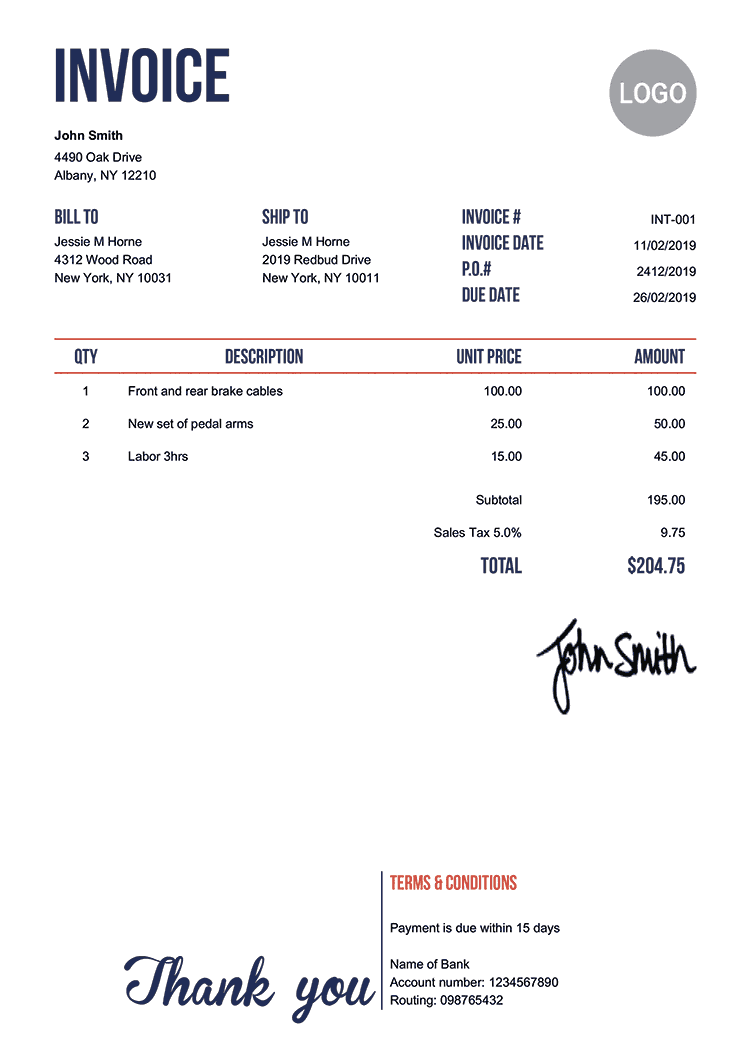
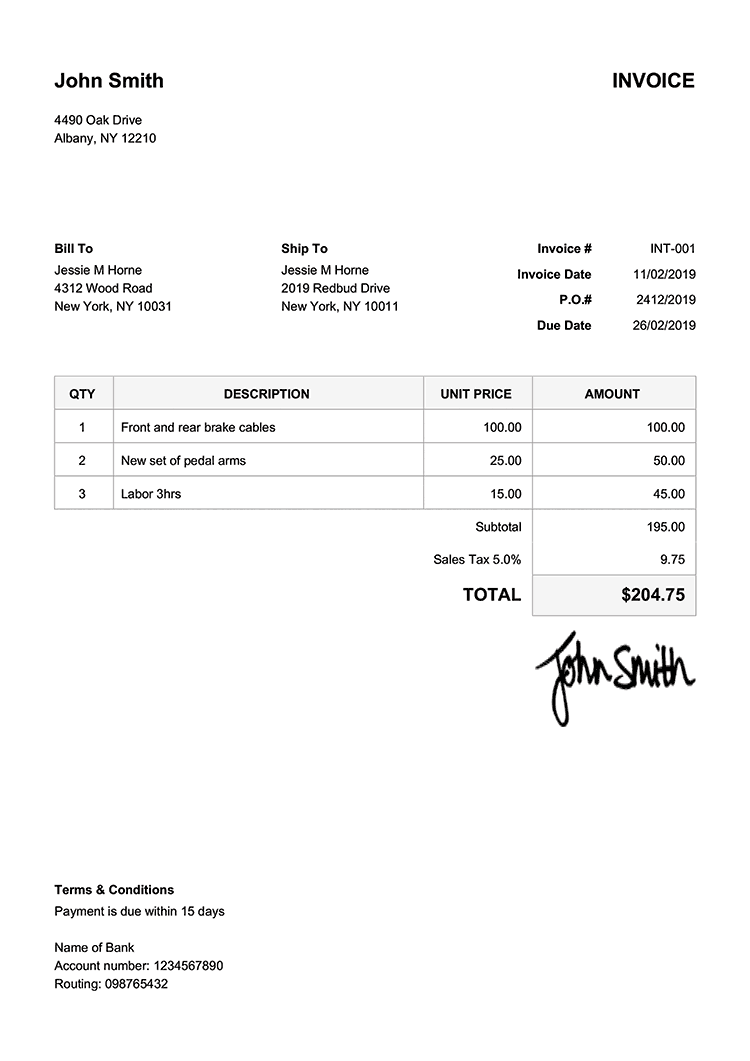
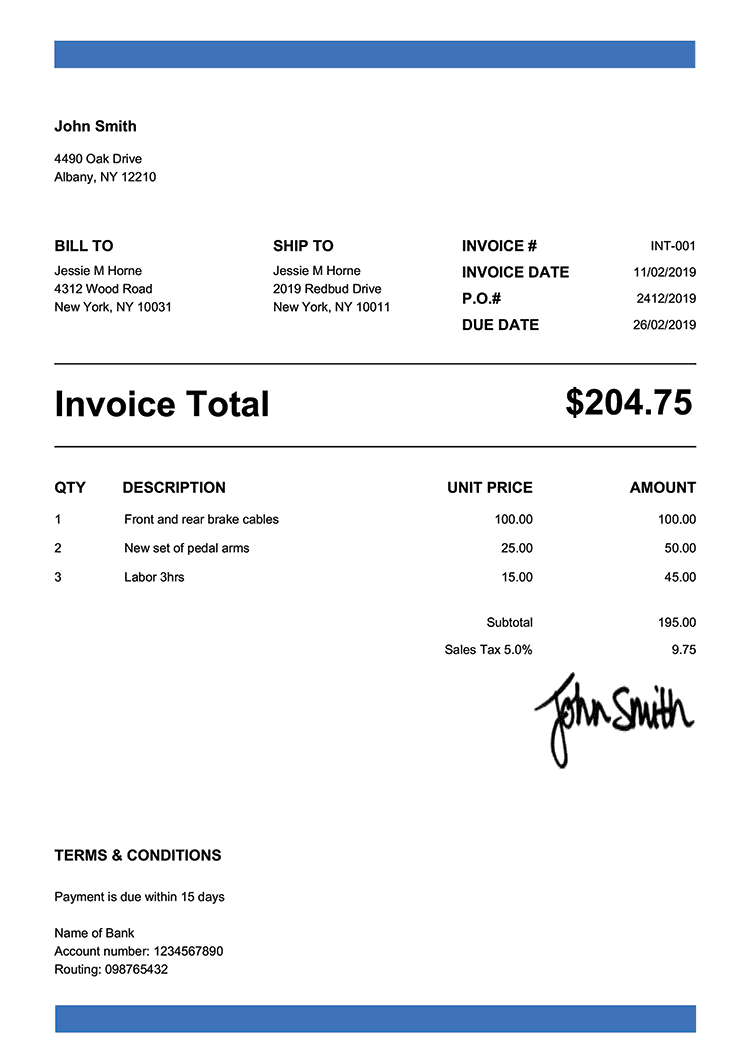
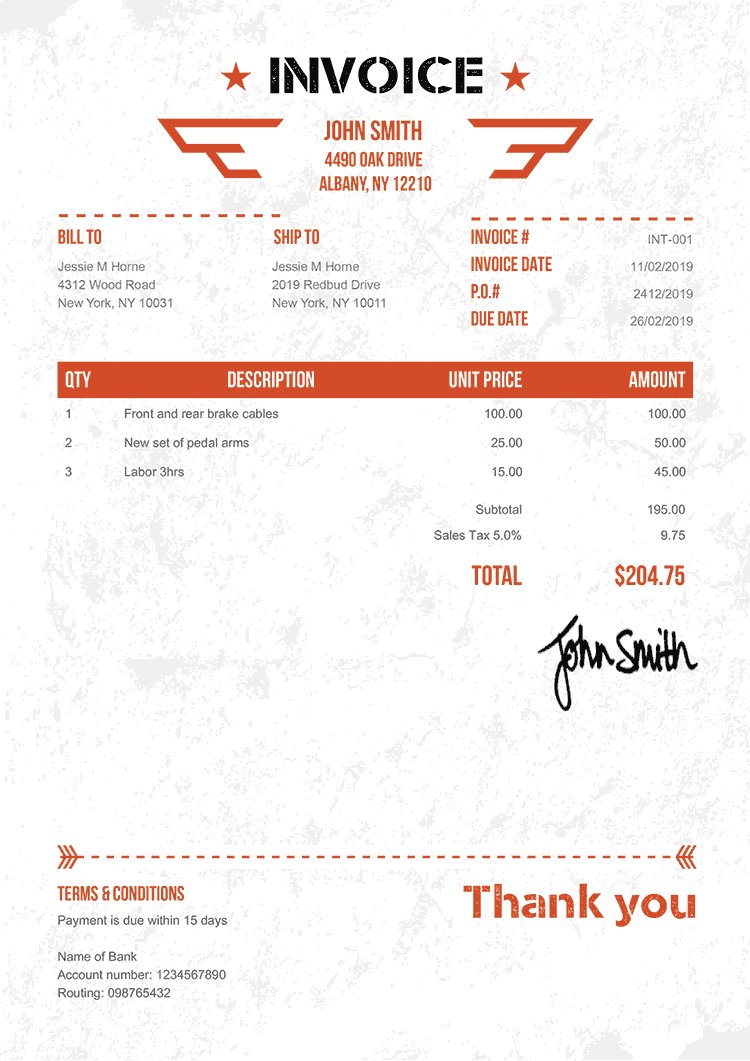


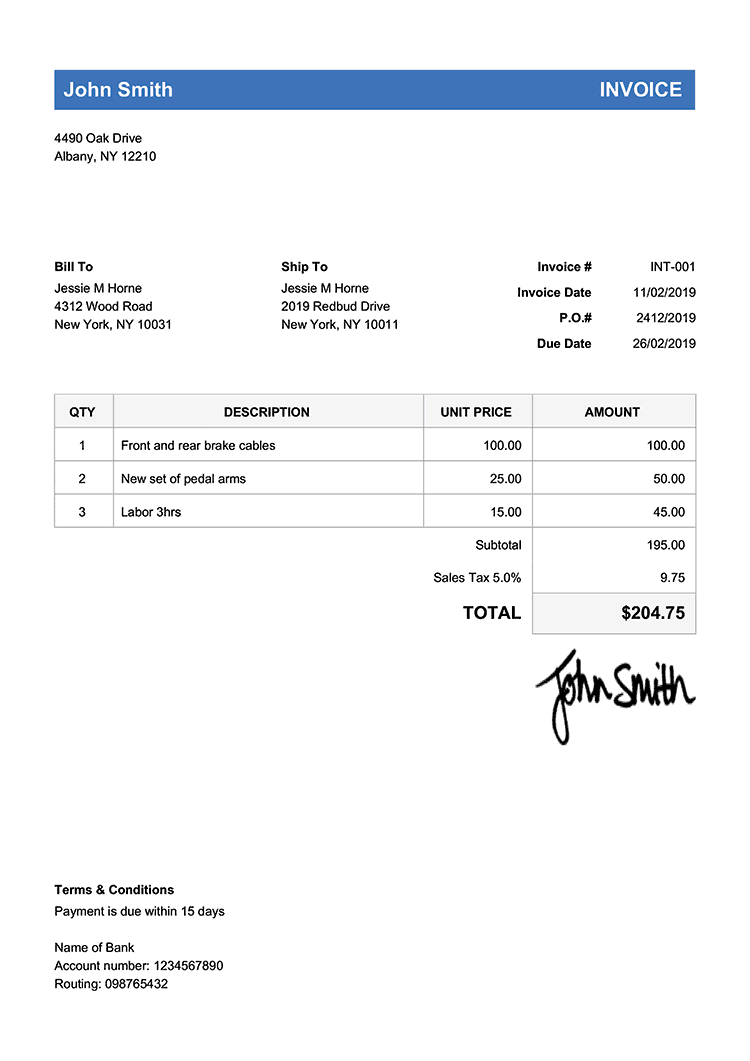
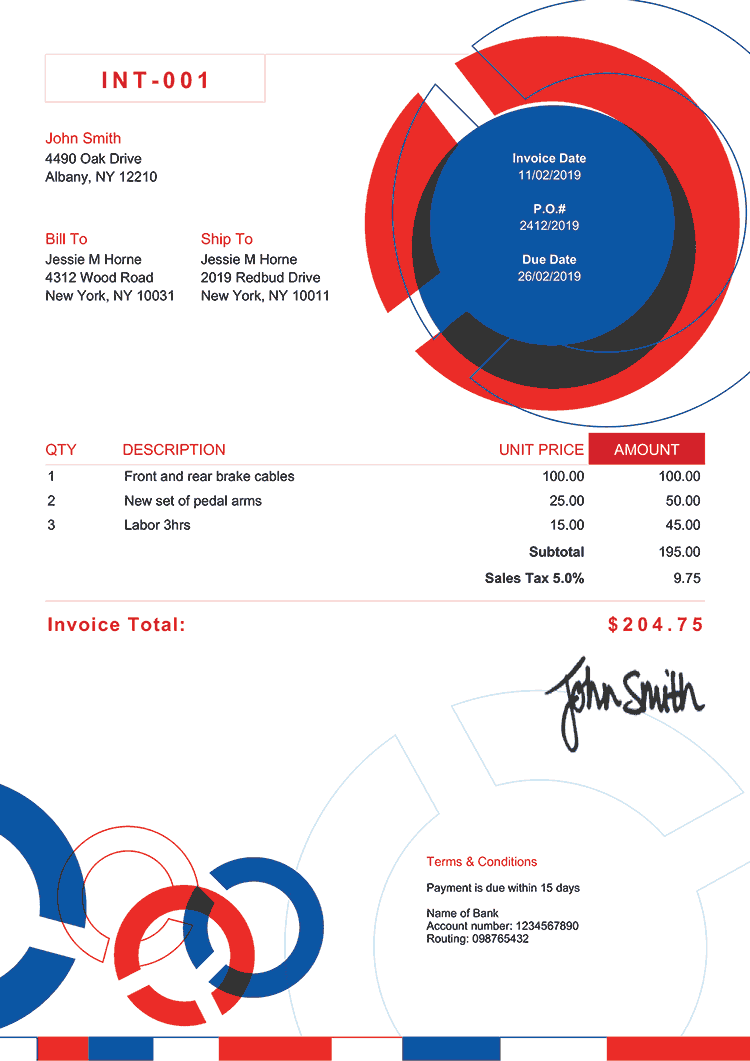
By using Invoice Home’s blank invoice form you can create, download, and send professional looking invoices in seconds.
A blank invoice PDF form will not only save you time since you won’t have to create a bill from scratch, but can also promote your business by customizing the design of the invoice to fit your profession. You can even add your own logo.
You can also send your invoices via email with payment links that'll let your customers pay online. That means your invoices will get paid faster!
Take a look at our features below and see why Invoice Home is used by over 5 million customers worldwide!
Kepler's laws and Newton's universal law of gravitation. Part 2: Oscillations and Mechanical Waves
Reflection, refraction, lenses, mirrors, interference, and diffraction.
: The final chapters address the theory of special relativity, atoms, and wave mechanics.
Heat engines, entropy, efficiency, and thermodynamic cycles (like the Carnot cycle). Part 4: Electricity and Magnetism
The 2nd edition is particularly noted for its structured examples that teach students how to set up a problem before diving into the math. Key Content Covered in the 2nd Edition university physics harris benson 2e pdf
Cover the solutions to the text's integrated examples. Try to solve them completely on your own before looking at Benson's steps.
: Connects abstract theories to practical engineering and everyday scenarios.
Explanations of force, mass, inertia, and applications of Newton's laws to real-world systems.
A notoriously challenging sequence for undergraduates, Benson simplifies these abstract fields using clear geometric visualizations and calculus. Kepler's laws and Newton's universal law of gravitation
While many sites claim to offer free downloads, it is important to be cautious. Most "free PDF" links found on search engines are hosted on unverified third-party sites that may contain malware or violate copyright laws.
The textbook is structured into distinct parts to mirror standard university physics curricula: 1. Mechanics Kinematics in one and multiple dimensions. Newton’s Laws of Motion. Work, kinetic energy, and the conservation of energy. Linear momentum and collisions. Rotational dynamics and angular momentum. Gravitation and planetary motion. 2. Waves and Acoustics Simple harmonic motion and oscillations. Mechanical waves and string travel. Sound waves, intensity, and the Doppler effect. 3. Thermodynamics Temperature, thermal expansion, and the ideal gas law. Heat transfer and the First Law of Thermodynamics. Kinetic theory of gases. Entropy and the Second Law of Thermodynamics. 4. Electricity and Magnetism Coulomb’s Law and electric fields. Gauss’s Law and electric potential. Capacitance, dielectrics, and DC circuits. Magnetic fields, Ampere’s Law, and Faraday’s Law.
Harris Benson, a physicist from Vanier College, crafted University Physics as a calculus-based introductory text for science and engineering students. The book is widely admired for its clarity, high-quality diagrams, and full-color photographs, which help in visualizing complex physical phenomena.
The textbook covers the full spectrum of introductory university physics, usually organized to accommodate a two- or three-semester course sequence. While the organization may vary, the core topics include: 1. Classical Mechanics Try to solve them completely on your own
I can provide targeted explanations or practice problems to help you master the material. Share public link
: Vectors, kinematics in 1-D and 2-D, particle dynamics, work, energy, conservation laws, linear and angular momentum, and statics. Oscillations & Waves
Special relativity, time dilation, and length contraction.


